

No One Can Do Everything…
Chapter 1 | Too Tired to Change

I’m serializing my debut nonfiction book on Substack—for FREE! If you missed why, read this first. TLDR; we need more Christian books by authors who are focusing on presence rather than platform and craft rather than celebrity. So, I’m raising money to fund a new micropress called Beautiful Discipleship Books. Support us by becoming a free or paid subscriber and contribute to a publisher where our witness is the Word.
I backed down the bunk bed ladder as quietly as I could and snuck through my bedroom door without waking my sleeping sisters. I found my way to the living room and tucked my dimpled feet beneath me in the wingback chair while rose-tinted morning light filtered through the blinds. I traced my fingers along the pale pink roses and sage green leaves woven across a dingy cream background. I wiggled my index finger between the cushion threads, thinned over years of family story times and early mornings like this one when I crept down the hall to read in a still quiet house. After burrowing a tunnel into the fluffy batting and resisting the temptation to pull some of it out through the gap in the cushion, I turned to the book I had dragged into the chair with me.
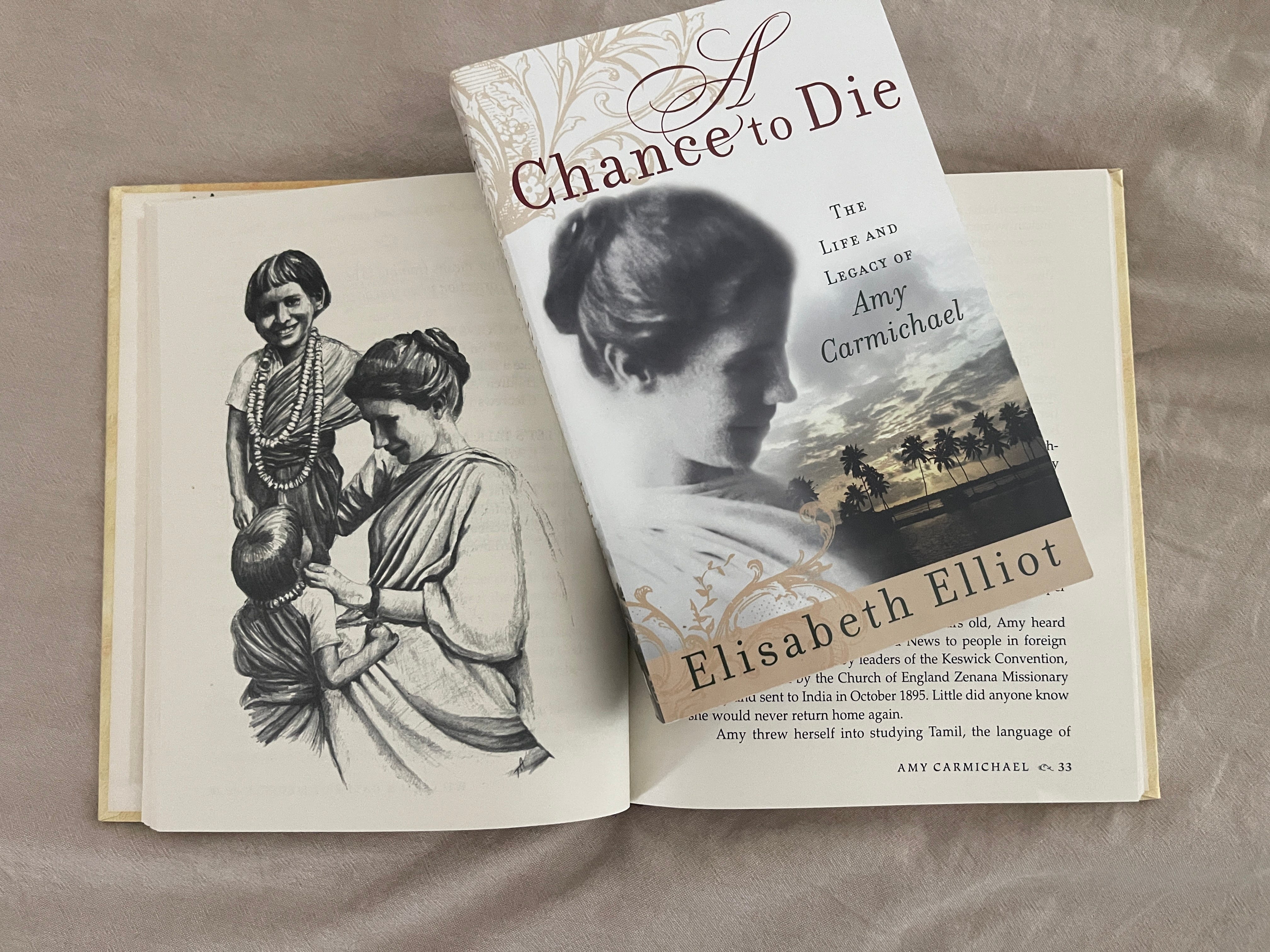
It was one of my favorites. Gracing a page of the hardcover volume was a woman, hair swept back into a bun, white fabric draped elegantly around her frame as she gazed lovingly into the eyes of a dark skinned child. Her name was Amy Carmichael and her story captivated me. The book was filled with vignettes from the lives of Christianity’s heroes and moral lessons for young readers to draw from their examples.
Servanthood and sacrifice from Amy Carmichael.
Humility and dedication from David Livingstone.
Faith and obedience from Hudson Taylor.
These tidy tales were my first introduction to devotional-inspirational literature, and throughout my childhood I would read dozens more Christian biographies filled with adventure and suspense and miraculous rescues and improbable answers to audacious prayers. Nancy Drew novels include similar characteristics (except for the prayers, perhaps), but they did not come nearly as close to capturing my imagination as the lives of Gladys Aylward, Corrie ten Boom, and Amy Carmichael.
What I didn’t know—couldn’t have known—at the time, was that just like Carolyn Keene’s fast-paced, heroic tales, these stories were designed to captivate me.
Evangelicalism’s Heroes
The great-grandfather of the devotional that dwarfed my lap that morning was published by Jonathan Edwards in 1749. The Life of David Brainerd was based on the diaries Brainerd kept while evangelizing indigenous tribes in what is now New York, Pennsylvania, and New Jersey. With some generous editing and personal annotations Edwards submitted Brainerd as a case study of what he believed true holiness looked like.
In Brainerd’s diary Edwards uncovered all the signs of true spirituality, as he defined it. Complete resignation to God’s will. Speech and behavior characterized by a certain “sweetness.” Total humility. An unusual sense of calm, even in the face of death.1
This intentional framing of Brainerd’s sacrificial service and utter disregard for his own wellbeing became Edwards’s most reprinted work. For the next 150 years it influenced the self-perception of thousands of American and European missionaries. The entire Western missions movement was built, in part, on this portrait of the missionary life as the ultimate road to holiness. Missionary training schools included it as recommended reading.2 Dozens of other prominent missionaries who have become evangelicalism’s household names explicitly reference The Life as the model of sacrifice and faithfulness to which they aspired. William Carey called it “almost a second Bible”,3 and Henry Martyn adopted as his life’s purpose a motto adapted from it: “Let me burn out for God!”4
250-odd years later I was being influenced by Brainerd, too.
A man who proclaimed the gospel to indigenous tribes for only three years, denied himself every material comfort, and died from tuberculosis at just 29 years old had been canonized as the closest thing Protestants have to saints. The mythos of his piety and higher levels of sanctification filtered down into the morning light around that wingback chair and the volume of missionary chronicles I pored over. As my reading skills grew, so did the books, and I would move on from accounts written for children to full biographies of Gladys Aylward, Corrie ten Boom, and Jim Elliot.
A Chance to Die.
The Cross and the Switchblade.
Through Gates of Splendor.
The Hiding Place.
Trailblazer Books.
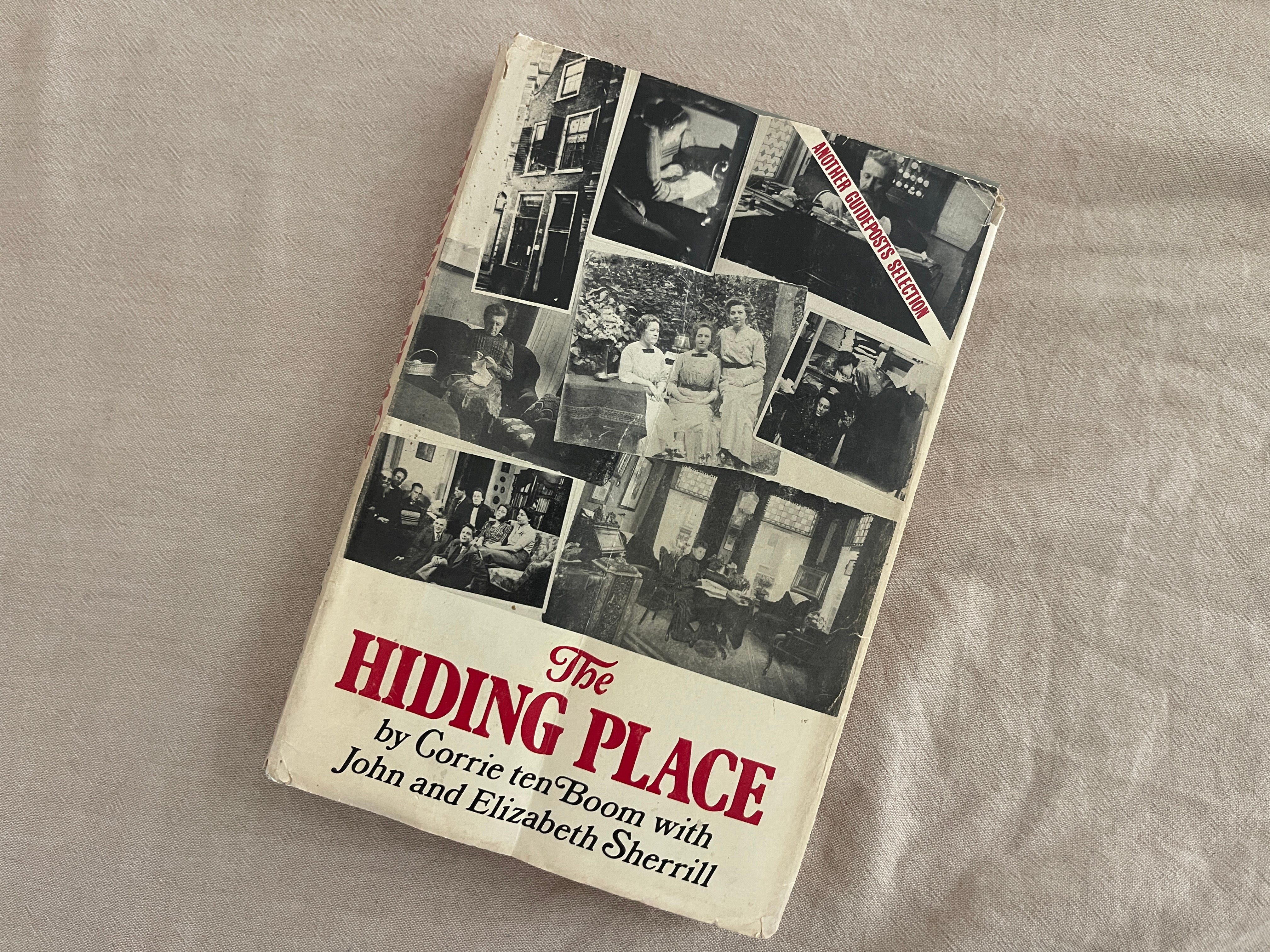
If you were immersed in American evangelicalism at the turn of the millennium you may even be able to picture the covers of these bestselling titles. My childhood was woven around these stories of significance and sacrifice. I wore them like the floral dresses with shoulder pads and 80’s puffed sleeves that my mom saved for us to dress up in. I only dreamed that my fledgling faith could one day grow to fill them. These were my heroes, and I never questioned whether or not their lives were actually heroic.
When I was unable to sleep, the peculiar anxieties of a seven- or eight- or nine-year old keeping me awake, I would imagine myself into a different life, a more predictable story. Would I be Cinderella, rescued from my drudgery and the persecutions of my older sister by a strong prince? Or perhaps I could be Amy Carmichael, rising above the disappointments of my mundane existence to find meaning in serving others. It was probably a fifty-fifty chance which one I would choose.
Of course I knew that I could never actually become Cinderella. That was just a fairytale. But Amy was real. Becoming Amy was possible. While one dream faded, the other hung on. While other kids grew out of their superhero fantasies I plunged deeper into my visions of sainthood. In high school I would finally get my chance to live them out.
In the Lord’s Army
Beads of sweat dripped down the small of my back and the sun hadn’t even risen yet. The Central Florida humidity threatened to wring every drop of moisture from my body through reverse osmosis, but I laced up my 8-inch Redwing work boots, dragged myself out of my small nylon camping tent, and stood in line with my teammates. Complaining about either the weather or the 5:30am wake up call was unacceptable for recruits at The Lord’s Bootcamp. For two weeks we would rough it in the virgin Florida jungle with no air conditioning, electricity, or running water. Our early mornings would be dedicated to reading the Bible and memorizing Scripture while our days were filled with manual labor and our evenings with sermons and stories from retired or visiting missionaries. Then we would “ship out” to spend the rest of the summer building a school, clearing an airstrip, or teaching English to orphans in developing countries around the world.
A summer mission trip between one’s junior and senior year of high school was a kind of rite of passage for the youth in my small Southern Baptist church. The hope was that we would return with a wider view of the world and a greater zeal for the Kingdom of God, an unforgettable experience that might buttress our faith through the transition to adulthood. I was beyond proud to be one of the first young women from my church to prove my commitment to Christ in this way. Mosquitos and snakes and pit latrines could not dampen my devotion.
After World War II, young Christians in the U.S. were becoming increasingly dissatisfied with traditional mission agencies, which had historically emphasized a lifelong commitment to mission work as a vocation. The increasing ease and decreasing costs of international travel and a growing awareness of global issues paved the way for new organizations like Youth With A Mission and Operation Mobilization to harness young people’s curiosity about the world and their interest in missions by offering shorter “terms” of missionary service. In the 1970s these short-term missions, or STMs as they came to be known, expanded from adult volunteers to college students and then even high school students. They also began to be marketed not just as service, but as opportunities for spiritual formation, cross-cultural experience, and leadership development. Beginning in the 1980s there was a staggering increase in short-term evangelical “missionaries” from 120,000 in 1989 to 2.2 million in 20065 when week-long or summer long trips had become almost standardized as a coming-of-age ritual for evangelical youth.

I wanted to imagine that I was uniquely ardent for the Kingdom, that I took my faith seriously in a way that others did not, that I—like Amy Carmichael or David Brainerd—was choosing the harder path. Sitting under a yawning, red and white striped circus tent, shoulder to sweaty shoulder with at least 500 other teenagers who also had not taken a real shower in weeks, I imagined a future of hardship and sacrifice stretching before me. What I didn’t yet know was that just a few weeks later I would stare down the reality of that kind of sacrifice in a way that I had only read about in my favorite biographies. When I returned home at the end of that harrowing summer I would process my trauma by promptly filling out applications to Bible colleges, ready to follow through on the card I had solemnly signed at debrief committing myself to lifelong vocational missions work. A few months before packing my suitcases for my first semester away from home I would write in my prayer journal, May I live everyday for you, sold-out, on fire, as though it were my last. So that when my last day comes I can fly to you in joy and peace, able to say that I did not spend my days pining after you, but preparing for your coming. Like the more than 2 million young people who participated in a short term missions trip that year I had answered the call to serve the least and the lost, and when my ‘yes’ resulted in a tragedy that would upend my life, I stood back up, ready to walk right back into the line of fire.
How was it then, that just twelve years later I found myself in a suburban kitchen funneling cheddar turtles into a silicone snack cup for my toddler with one hand while balancing a nursing baby against my bare chest with the other? Where had I turned left onto what my childhood heroes would have considered Easy Street? The holy ambitions I had imagined pursuing lay abandoned, like those puffy sleeved dresses after a long afternoon of playing “Little House on the Prairie” in our backyard, and I was sure that Amy Carmichael and David Brainerd would have looked with disdain at my ordinary days. Did my eager peers from those sticky Florida days feel as deflated as I did? Did they remember their pledge cards and ceremonious commitments with shame that they had failed to follow through, or with indignation at the impossible standard we had been given? Maybe it was a little bit of both.
Revisiting My Heroes
I wondered how the stories of my childhood heroes might land here, in my mundane mid-life days, so I pulled a few from the top shelf of my bookcase and ordered a few of the others I remembered. I started re-reading them a few minutes at a time in a somewhat exhausted daze between the kids’ bedtime and my own. That fantastical land of inspirational-devotional biography was exactly as I remembered it.
The books took an autobiographical approach and were filled with quotations from diaries and letters. They incorporated a significant focus on the subject’s personal piety with little to no mention of spiritual doubts or moral failings. I learned that Amy Carmichael intentionally left unrecorded or chose to later destroy any evidence of her own faults or failings in her writing. She was convinced these glimpses of her full humanity could not possibly edify the children she served through her ministry or her readers back home.6
As a child this veneration of the faithful had been nothing but inspiring, but as an adult it now felt stilted and spurious. I was struggling to pray through my toddler’s temper tantrums instead of snapping in frustration at him, my patience stretched like a tightrope between two deep breaths. So, I’m pretty sure Amy Carmichael had some shortcomings of her own. Was she a procrastinator? Was she short tempered? Did she inwardly groan when the cook at Dohnavur prepared broccoli? We don’t know, and based on what she and others wrote, we never will.
But I started to notice something else, too. It seemed to be more than a coincidence that these inspirational-devotional biographies had emerged as a compelling genre. Book after book, whether written for adults or younger readers, followed a pattern. The stories that had so captivated me as a child could still grip me as an adult, their yarn unspooled across my consciousness like a film reel.
The stories often begin with an awkward adolescent who doesn’t quite fit in with their peers. Their deepest desires for belonging and significance seem to go unmet. But then something happens that changes everything. The blinders are removed and they realize they were created for something more than the comfortable existence they used to covet.
As they mature into their gifts and calling they face both internal and external obstacles that seem insurmountable. Skepticism, or even ridicule, from family and friends, self-doubt, and selfishness. Injustice, misunderstanding, supernatural embodiments of evil. All this they overcome, ultimately succeeding in transforming themselves and the lives of those they have been called to serve.
Finally they are recognized and perhaps even rewarded for the ways they have blessed the world and they can live out their final days with peace and purpose.
But that’s also the plot of Spiderman.
No, really. Go ahead and read it again, I’ll wait.
Do you see it? So many of these biographies in which we were immersed follow the same narrative structure as classic fairytales and superhero stories. It’s called a three-act narrative structure. You may also hear it called “the hero’s journey.” It originated in the dramas and mythologies of ancient Greece and has come to define modern Western literature, theater, and film. It has also come to define an entire genre of inspirational-devotional Christian biographies. Even if you never read these books, you were undoubtedly influenced by them and by the structure of the hero’s journey. It has seeped into our sermons, with our pastors outlining linear paths to transformation if we’ll just follow three easy and alliterative application points. Every nonprofit giving appeal and fundraiser is built around the idea that prospective donors will give more if they are made to feel like the hero of the story being told.
I learned that David Brainerd had been edited and elbowed by Jonathan Edwards into a symbol for a particular vision of sanctification, and I realized that the Amy and Gladys and Corrie and Jim I had been introduced to as a child and young adult were not saints, at least not in the biblical sense of the word. They were just characters cast in someone else’s fairy tale.7 And here I was, disappointed that I had not managed to fashion my own life into the form I thought it was expected to take.
Real Saints Don’t Sell Books
For almost three centuries American evangelicals have been hungry to read a particular kind of biographical account, one we can get lost in, that inspires us with the possibilities of uncommon and inspirational piety. From The Life of David Brainerd to Kisses From Katie we have told Christian publishers that these are the stories we will buy, for ourselves, for our children, for our unbelieving neighbors. These are the kinds of stories that pastors and the leaders of mission agencies believe will inspire more people to commit their lives to the cause of foreign missions. I believed that true faithfulness would mean that a story like these might one day be written about me.
The stories we tell matter. How we tell them matters. What we leave out matters.
By painting these pictures of heroes to emulate, we set up a false expectation of radical response to God’s “call” instead of faithful obedience to the ordinary commands of Scripture. Almost without realizing it we began to place certain “radical” Christians on a spiritual pedestal. The result has been either that we exhaust ourselves trying to live up to an impossible standard of faithfulness, or that we are tempted to give up on making the difficult choices necessary to pursue any kind of faithfulness at all. But mercifully, the picture of faithfulness that Scripture paints is drastically different from the saccharine sketches of inspirational-devotional literature.
In fact, you would be hard pressed to find a character in the Bible whose faults and failings are not included as a testament to God’s grace and goodness and seemingly foolhardy determination to bring about His purposes through ordinary people. Scripture is filled with stories of incredible acts of faithfulness, but over and over the Holy Spirit makes a point to also include stories of moral failure.
By faith, Abraham obeys God’s call to leave Ur (Genesis 12:1), but later, in a distinct posture of faithlessness, passes his wife off as his sister… twice (Genesis 12:13; 20:2)!
Moses leads the Israelites out of captivity in Egypt, but is not allowed to enter the promised land because he obscured God’s glory before the people by pridefully and egotistically striking a rock instead of speaking to it as God had instructed him (Numbers 20:12).
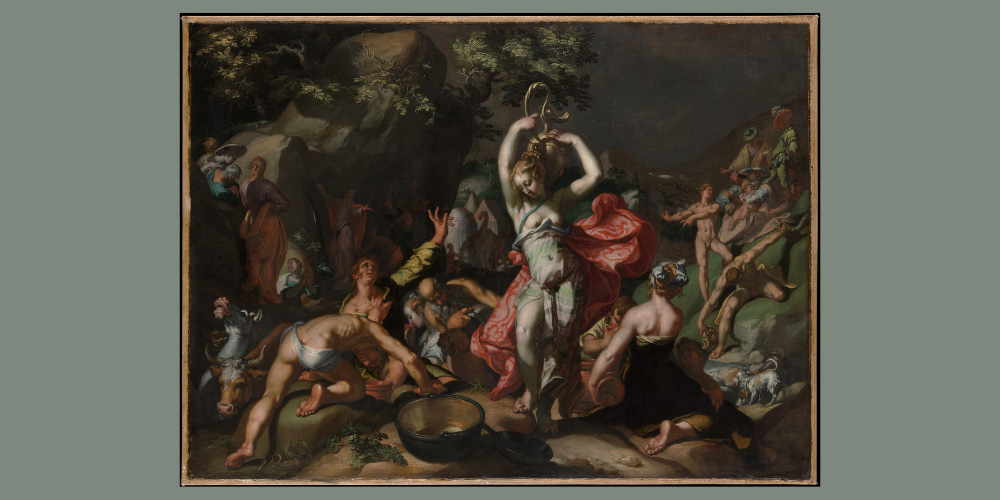
David, “a man after God’s own heart” (1 Samuel 13:14) seems to sin almost more than he succeeds. He commits adultery with Bathsheba and murders Uriah to cover it up (2 Samuel 11). One of his son’s rapes his half sister and David doesn’t step up to mete out the appropriate punishment (2 Samuel 13). He takes a census in direct defiance of God’s commands (1 Chronicles 21). Let’s just say David’s biography, as published by OT Press probably wouldn’t be a bestseller.
Peter, the “rock” upon which Jesus promises to build His church (Matthew 16:18), denies Jesus on the eve of His crucifixion, and later, in the middle of His church building career, has to be corrected by Paul when he mocks the gospel by refusing to eat with Gentile disciples (Galatians 2:11-14).
These are not single sentence asides in the narrative of Scripture. Entire chapters are devoted to telling the unfiltered truth of these grievous mistakes. Because the aim of the Holy Spirit in the inspiration of Scripture was not to present Abraham and Moses and David and Peter as heroes in these stories, but to put on display the God who is faithful to His promises, even and especially in the midst of our sin. Without both positive and negative examples our Bibles would be a lot lighter, and a lot less instructive. If Scripture presented only a glowing narrative of the faithful, how lonely would we be, convinced that our own shortcomings were anomalies? And how much dimmer would the grace of God appear without the backdrop of the dysfunctional family of humanity that He sent Jesus to redeem?
We Need Saints, Not Superheroes
We have fallen for an incomplete account of faithfulness. We were drawn in by the myths of shining heroes, forgetting that the light of Christ sparkles brightest when it refracts off our imperfections. We wanted the “already” to be all there was, to leave the “not yet” obscured between the pages of the second act. We wanted Christ the Victor and Christ the Conquering King in this messiness east of Eden, so we fashioned Amy the Victor and Corrie the Victor and Jim the Victor and wound up feeling inadequate and distinctly unvictorious when our own hero’s journeys didn’t pan out.
My seven-year-old self, tucked into that wingback chair with nothing but the hum of the air conditioner to distract her, had understandably grandiose visions for her future considering that most of the stories she was given to read were classically structured epics in which the stakes were nothing less than lost souls and the inbreaking kingdom of God. Given the narratives that filled my head and had filtered into my heart, it shouldn’t surprise me that I grew up to imagine the title to my future biography. Many of us have already begun to recognize that we were always designed to be supporting characters rather than the heroes in the grand drama God is directing. We have started to remove ourselves from the center of the narrative. But it’s still tempting to creep back toward center stage, and unless we do the hard work of building something new at the center of ourselves, we’ll keep finding we want to slip back into that hero’s costume.
I’m serializing my debut nonfiction book on Substack—for FREE. Subscribe so you don’t miss the next chapter.
Did you read missionary biographies as a child or young adult? Have you considered how they may have shaped you?
Conforti, Joseph. “Jonathan Edwards’s Most Popular Work: ‘The Life of David Brainerd’ and Nineteenth-Century Evangelical Culture.” Church History 54, no. 2 (1985): 188–201. https://doi.org/10.2307/3167235, 195.
Conforti 196.
Quoted in E. A. Payne, "The Evangelical Revival and the Beginnings of the Modern Missionary Movement," Congregational Quarterly 21 (1943): 228.
Conforti, 193.
Corbett, Steve and Fikkert, Brian, When Helping Hurts (Moody Publishers 2012) 151.
Elisabeth Elliot, A Chance to Die, 28.
It was surprising to learn that many of these bestselling inspirational-devotional biographies were written by the same people. The Cross and the Switchblade (1963), God’s Smuggler (1964), and The Hiding Place (1971) were all co-written by the same couple, John and Elizabeth Sherrill. According to Rick Hamlin, the former executive director of Guideposts, Elizabeth Sherrill had a gift for “coaxing stories out of others and then helping them share their highly personal accounts of God at work in their lives.” But I wonder if, like Jonathan Edwards, it was her and her husband's editorial gifts that resulted in the power and popularity of their stories.
Oh my gosh. I read all of those books. This was like a trip back in time. You were not alone in your hyped ideas of what your life was supposed to look like. Thank you for sharing your work with us!
Yup. That’s me. Real life and lots of years more or less sorted me out.